
No
asterisk.
Pork, salt, spice, and a live starter culture. No nitrites, no nitrates, no celery powder standing in for them.
How it's made ↓Ten weeks,
minimum
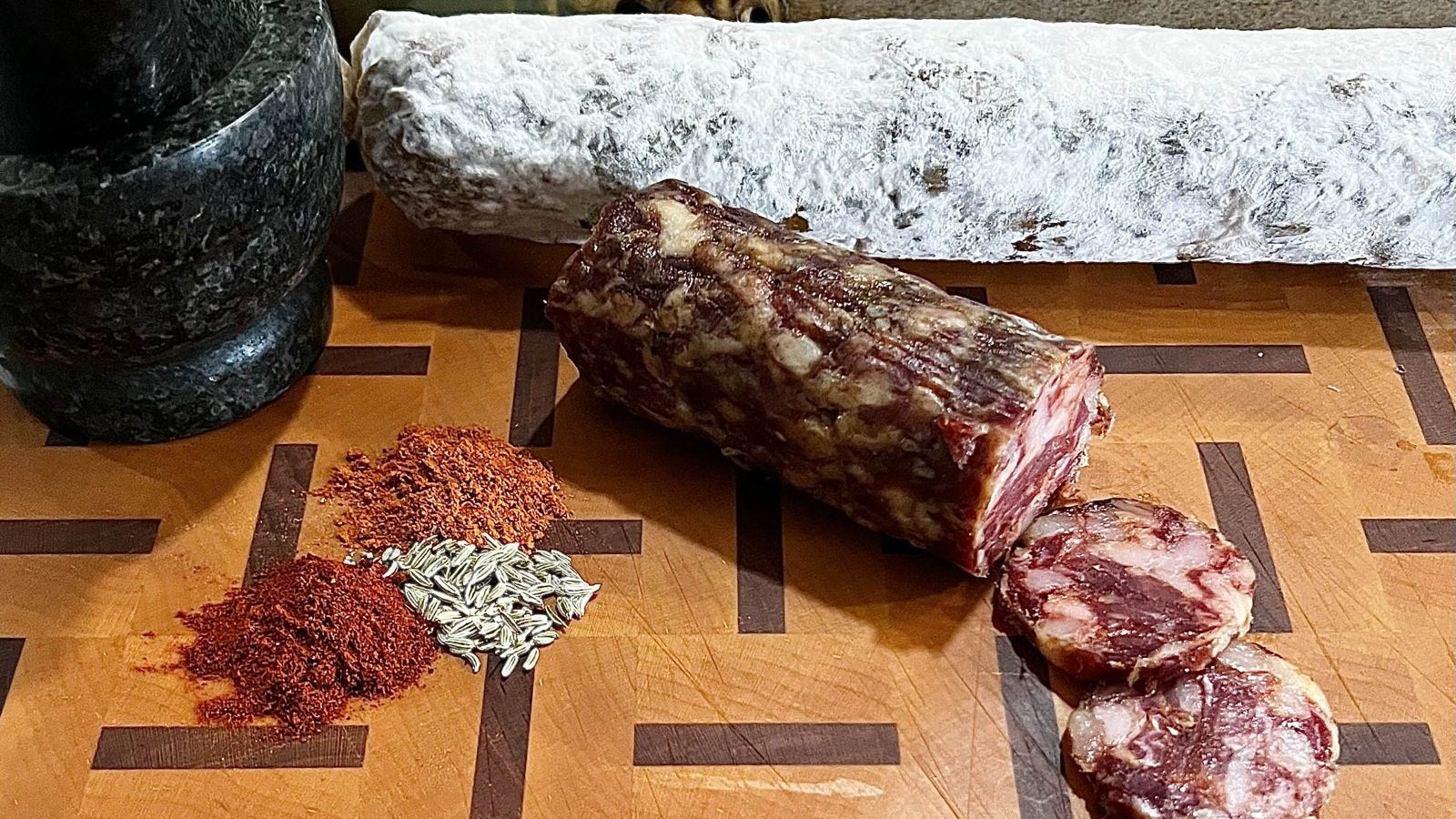
A coarse grind you can see. More fat than most American cures, because fat is where the flavor lives. Every chub stuffed by hand and hung to age for no less than ten weeks, until it loses a third of its weight and comes into the soft, deep bite that only patience gives.
We cure with salt and a live starter culture, and nothing else.
No asterisk on the label, because there's none in the meat, and no shortcut behind it.
Ground coarse at 8mm, seasoned, and stuffed by hand. The coarse grind isn't only for looks — it leaves channels for water to walk out of the center instead of trapping it there.
Right now it tastes like seasoned pork. Everything that makes it salami hasn't happened yet.
The starter culture goes to work, turning sugar into lactic acid. The pH drops.
A clean, faint tang arrives — cured, not raw. The proteins have set enough to hold a slice.
A white bloom takes the casing and slows the drying from outside in.
This is what keeps the rind from hardening ahead of the middle. No leathery edge, no chalky ring around a soft center — the whole slice arrives at the same place at the same time.
The slow part. Enzymes break long proteins down into free amino acids, and fat into free fatty acids, while the meat is still moist enough for it to happen.
This is where the savory depth comes from — glutamate that wasn't there on day one, plus nutty, faintly cheesy notes off the fat. The same breakdown is quietly loosening the texture.
A third of the weight is gone to the air. It comes down when it's ready, not when the calendar says so.
Concentrated, and tender rather than tight. A short bite that gives way and melts — not the rubbery snap of something fine-ground and hurried.
Not one country's tradition — the whole map
The craft is old; the spices are older, and we take them from every road they traveled. Each one is named for where its spice box points, in that language.

Whole fennel seed cracked fresh, finished with a dusting of true fennel pollen — the plant Greek cooks have built whole dishes around for centuries, and the reason this one earned its name.

Cumin toasted right before it's ground, the way Turkish cooks have always done it — the difference between dusty and nutty is that one step. The earthiest thing we make.

The heat doesn't announce itself. It builds slowly, arrives late, and stays — true to a name that means fire in Guaraní.

Restrained and aromatic, in the old Italian sense of dolce — built for a board with good mustard, and best at winning over someone who swears they don't like salami.

Paprika by the handful, the way Hungary uses it — not the pinch most recipes call for — and it blooms into something smokier the moment it hits a hot pan.
We'll tell you when the first batch comes down
Ten weeks is a long time to wait, and we're not going to fill it with email. Leave an address and we'll write when there's salami to sell — not before.
No more than one email a month. Unsubscribe any time.
It isn't only a board
Salami is an ingredient. Marathos renders into a pan of greens and beans; Toprak turns into a Turkish breakfast, eggs cracked right into the fat; Fustos melts into a paprika-red skillet, Hungarian style.